Dah Chong Hong (DCH) · EY Mtel
Designing an after-sales service for a historical distribution of appliances
Dec 2022
“Let's get started with this project first! As it's one of the projects we do end-to-end — from design thinking workshop to implementation.”
The Beginning
Dah Chong Hong (DCH) is a historical Hong Kong conglomerate. The client wanted to develop an online self-service platform to reduce call centre workload. Our scope covered a Design Thinking Workshop, roadmap and MVP creation, and implementation of the digital platform.
How We Do?
We started with stakeholder interviews. A key finding emerged: the big gap was not between brands, but miscommunication between divisions. Our mission became enabling better communication and clearer responsibility across teams.
“They have a wide range of services, but our project is focused on Electrical…”

The Workshop
We designed a 3-day workshop to bring design thinking into the organisation. We mapped the customer journey and pain points with the customer service team; created How Might We statements; ideated solutions and illustrated them with storyboards; validated concepts with end-users through critique sessions; and prioritised the wishlist into MVP 1, 2, and 3.
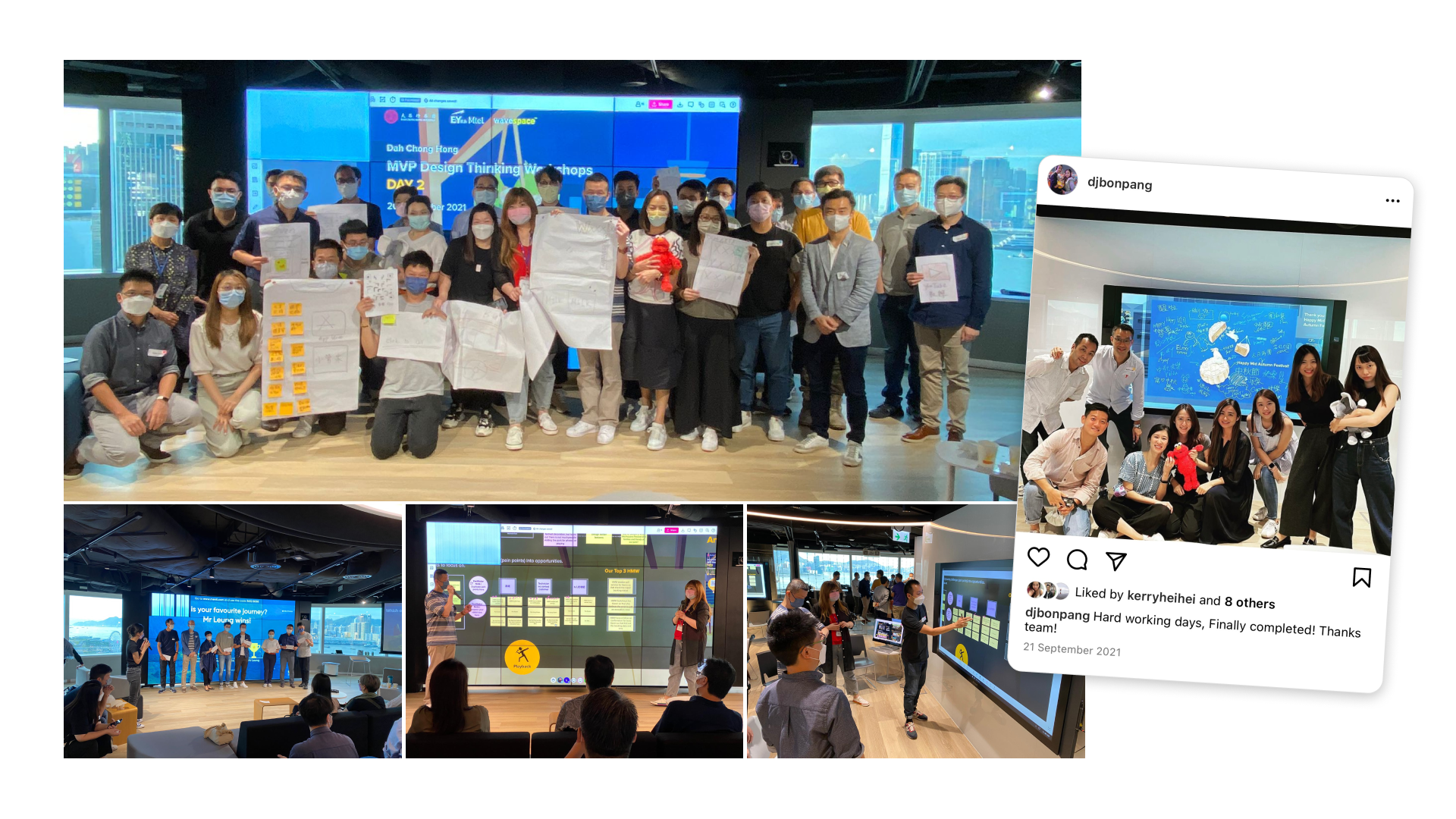
Apart from the design thinking mindset, we had additional missions to address through the workshop:
Positive & Negative Scenario
Most of the team only looked at the bright side of the online service, but they weren't aware how much workload could be generated when the online platform launched. We put a Positive and Negative Scenario section on day 1, to push members to think about both positive and negative effects that could be happened.
Hero Teams
The role and responsibility is unclear. We spotted the problem of shirking responsibility. For example After sale team suppose Marketing will launch the QR code for promoting the platform, but the Marketing team suppose this is done by the product team. We included a Hero Teams section, to find anyone who can take responsibility on the task, and it turns out a task force team at the end.
Enabler & Blocker
Finding priority of dependence. To enable the online platform to work well, too many small pieces are needed. But it's not possible to do everyone at one time. We need to list out all of them, prioritise them, to see which pieces should be ready at a specific timeframe. So we add a Enabler and Blocker section, to allow every member to brainstorm all possible enablers and blockers, so that we can be aware of it during the design.
“The workshop is very successful and fun, it's a really good show. Love the team so much!”
The MVP Outcomes
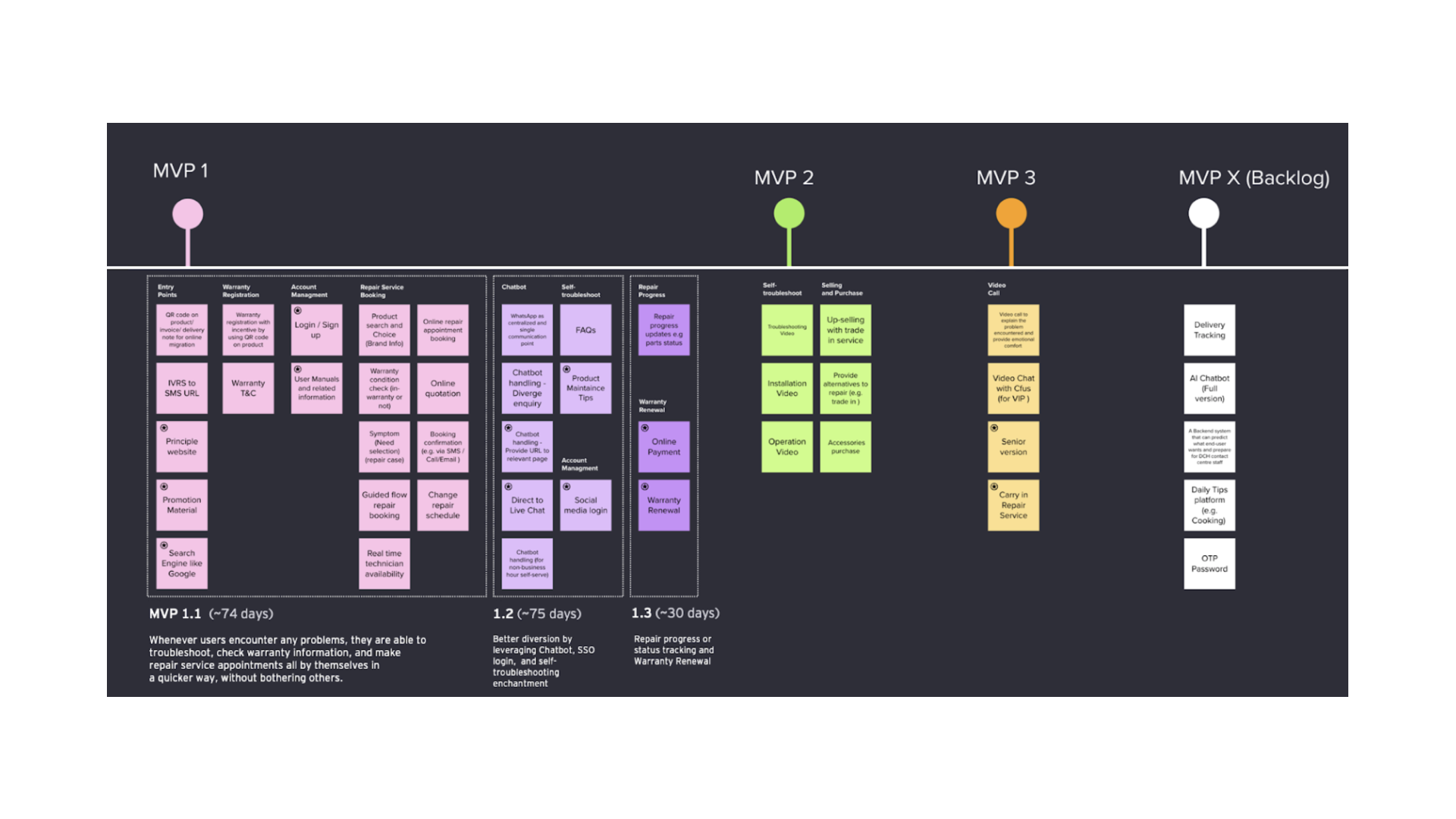
Based on workshop alignment, we developed scope to help users get their jobs done. The final outcome: offloading physical effort and manpower to online self-serve.
“Whenever users encounter any problems, they are able to troubleshoot, check warranty information, and make repair service appointments all by themselves in a quicker way, without bothering others.”
MVP 1
- —Entry points — QR code, SMS-URL, website
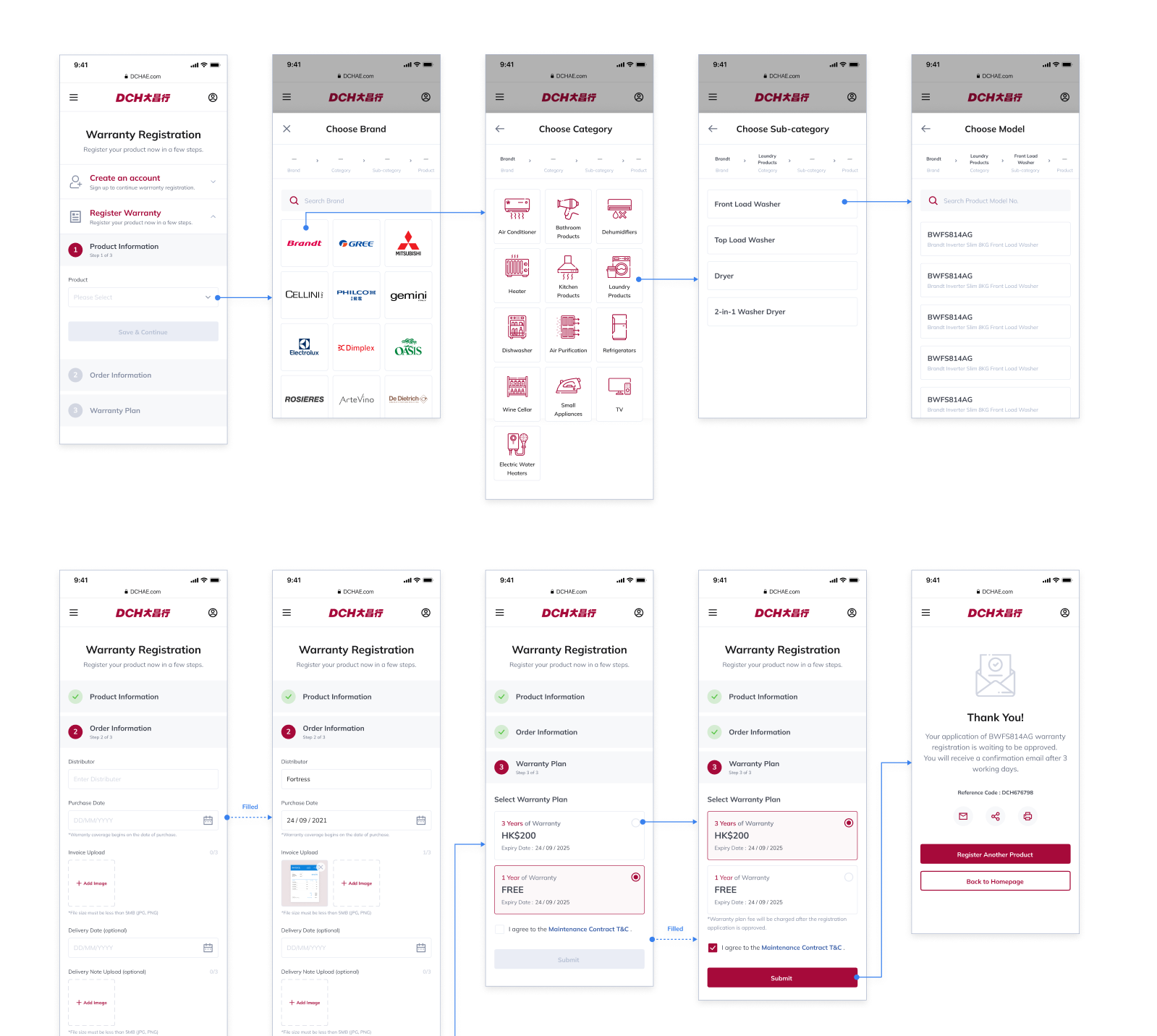
- —Warranty registration flow
- —Account management
- —Repair service booking
- —Chatbot for inquiries
- —Self-troubleshooting (FAQs, tips)
- —Repair progress updates
- —Warranty renewal with online payment
MVP 2
- —Self-troubleshoot with instructional videos
- —Selling and purchase — up-selling, trade-ins, accessories
MVP 3
- —Video chat with CS for VIPs
- —Senior version
- —Carry-in repair service
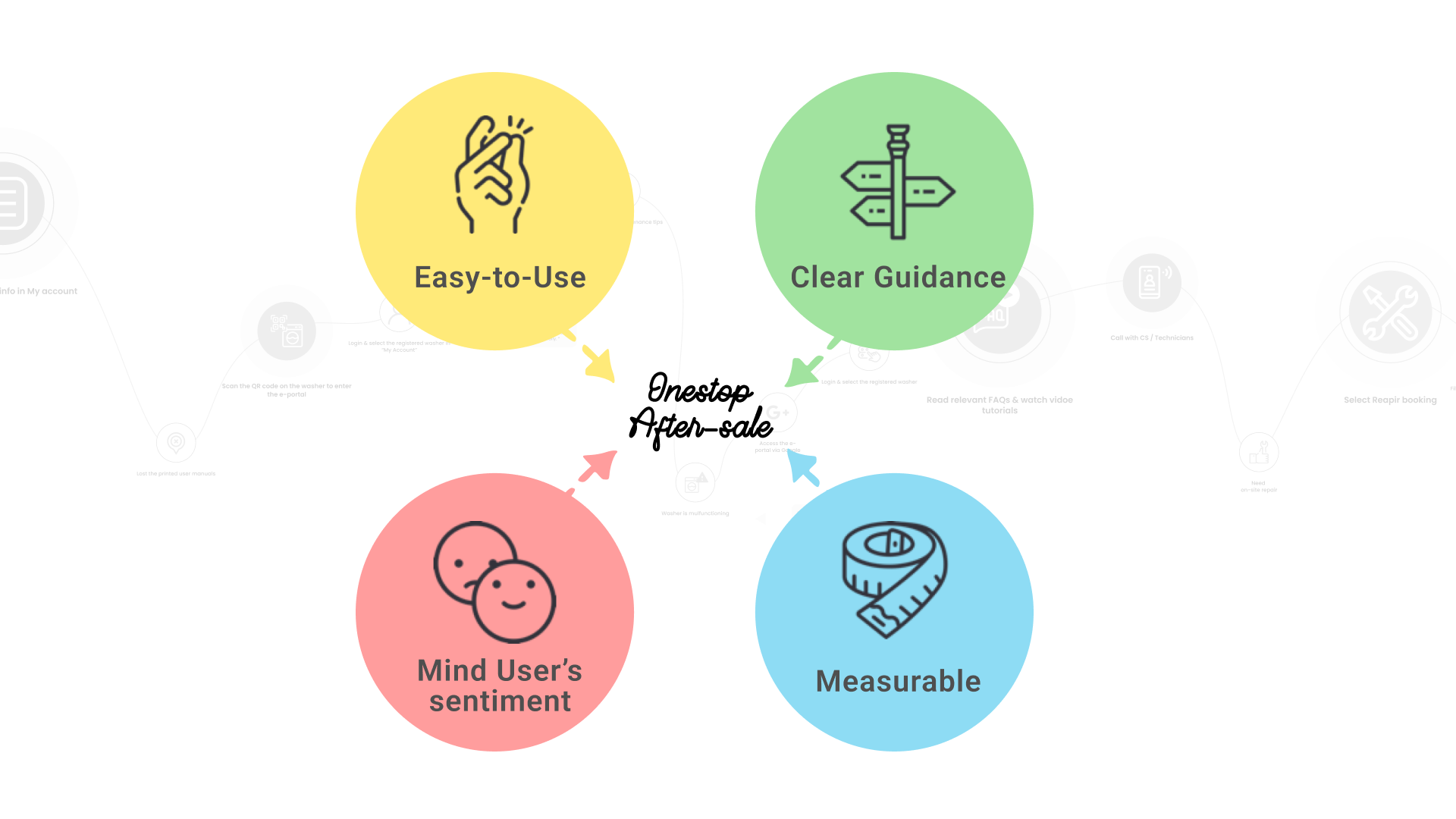
The Design Principle
We set up design principles based on stakeholder interviews, benchmarking, and the workshops — all centred on onestop after-sale:
“It takes a long time to reach the Interface Design stage. We start to visualise the MVP as a tangible product through wireframing and visual UI design.”
Clear Guidance to Enhance Discoverability
From the beginning, the goal was to migrate call centre workload for after-sale service. We created a simple experience to switch customers to online self-serve from offline touchpoints — clear guidance, step by step, for troubleshooting, warranty registration, or repair booking.
Shift Users to Self-Solve
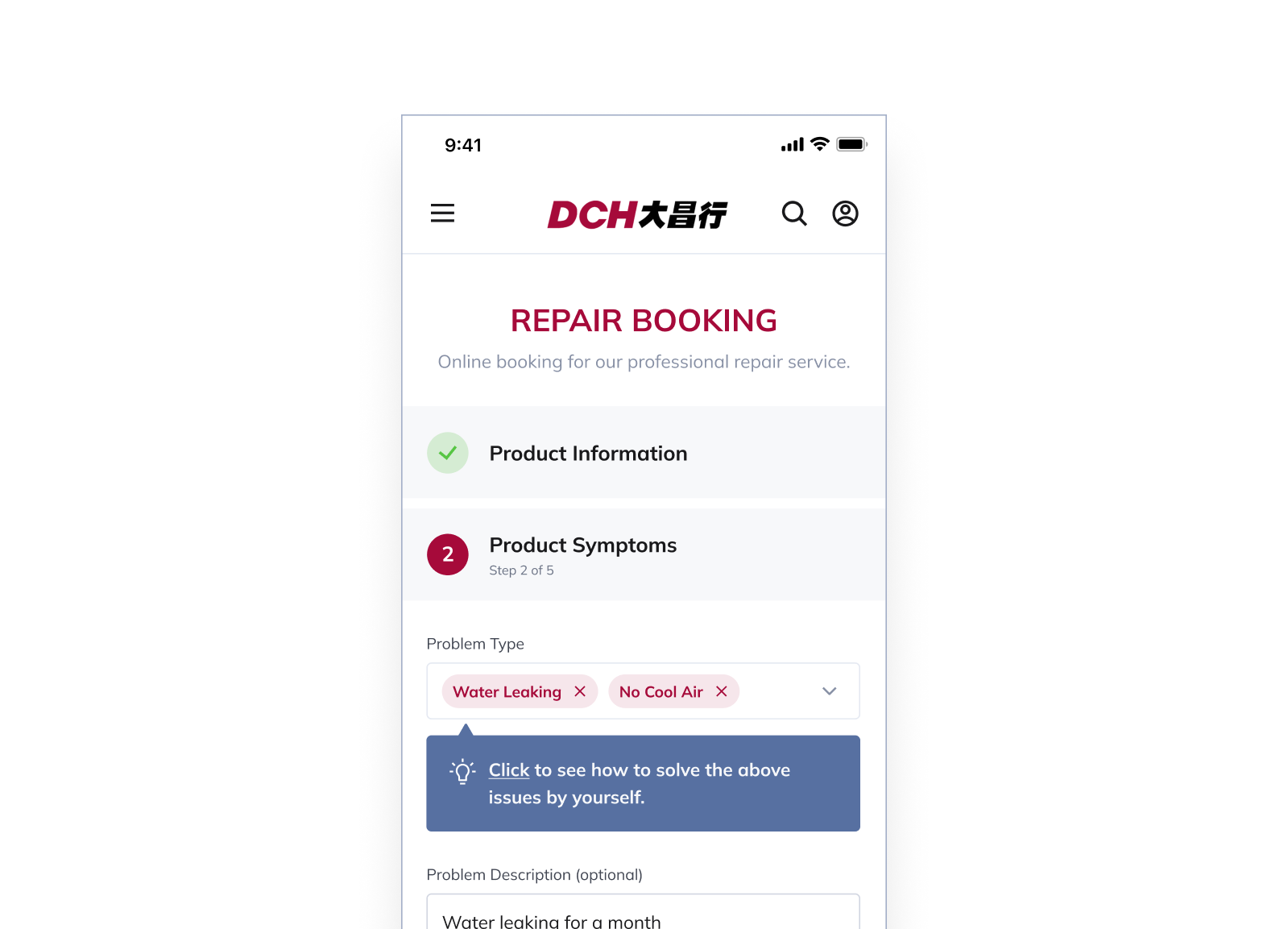
During discovery we found many cases were simple fixes — like pressing a button. When users input a problem type, the system surfaces possible quick fixes without blocking them from booking repair if they still need help.
“When a user inputs a problem type, the system will sort out any possible quick fix. It won't stop users if they still want repair service, but lets them find solutions in a short time.”
Bind Past Purchases to User Accounts
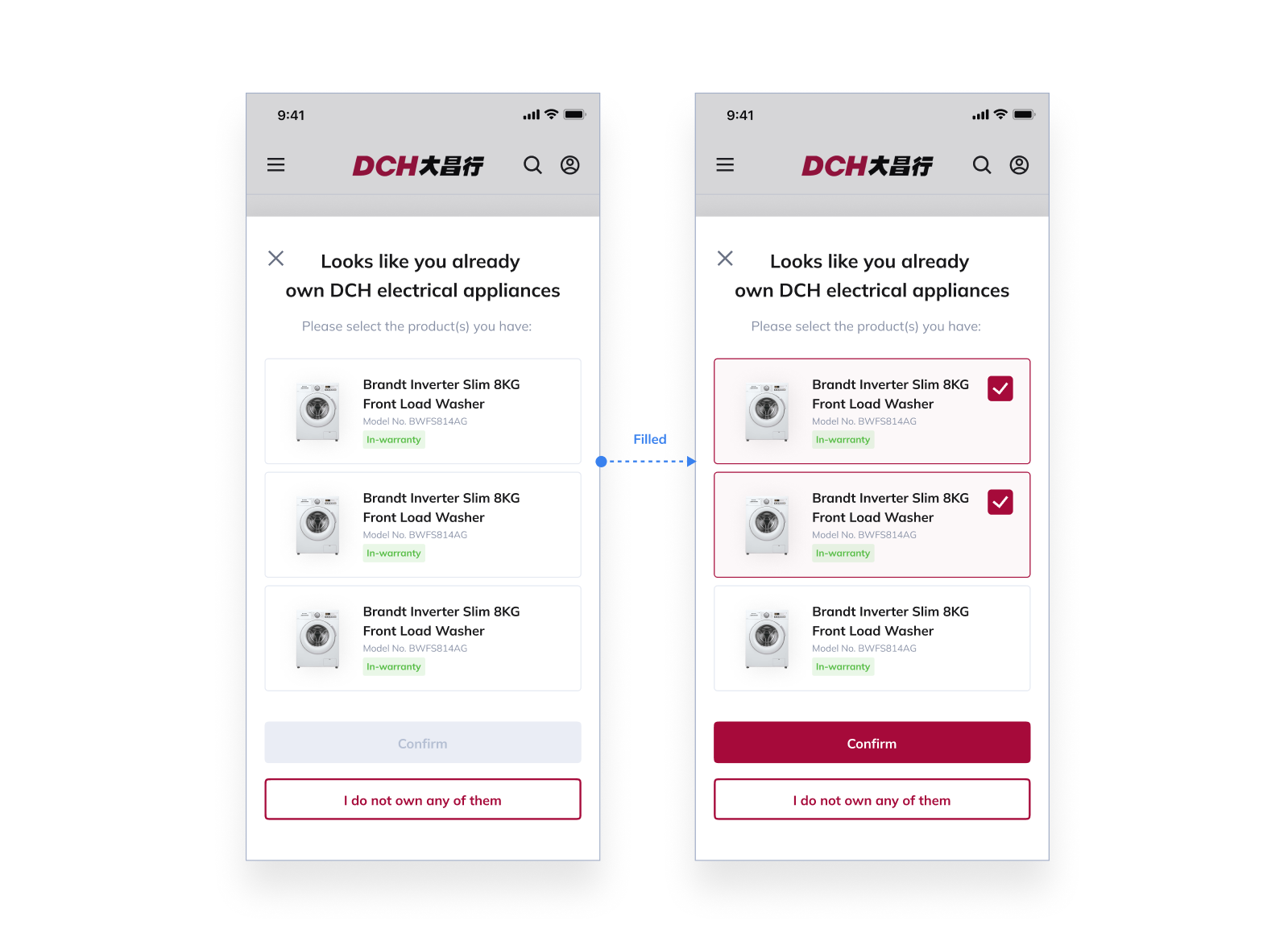
The previous warranty system had no user account. After registering a new product, the system matches phone, address, or name in the database and prompts users to bind previously registered appliances to their account.
“This benefits warranty management and gives marketing a holistic picture of the customer for planning new strategy.”
- Design Thinking Workshop
- Customer Journey Mapping
- MVP Roadmap
- Wireframing & UI Design
- Digital Platform Implementation
See the real product in the wild.
dchtoolbox.com↗